Neuro Recall Benefits: What the Ingredients Are Studied For
Quick answerNeuro Recall has no proven benefits of its own, because no trial of the product has been published. Its ingredients are studied for attention speed (bacopa), blood sugar (berberine, chromium), eye health (lutein) and low B12. Ginkgo did not prevent dementia in a 6-year trial. The clearest benefits are practical: a simple 2-capsule routine and printed vitamin amounts.
- Refund terms shown at checkout
- Shipping cost shown before you pay
What benefits does Neuro Recall claim?
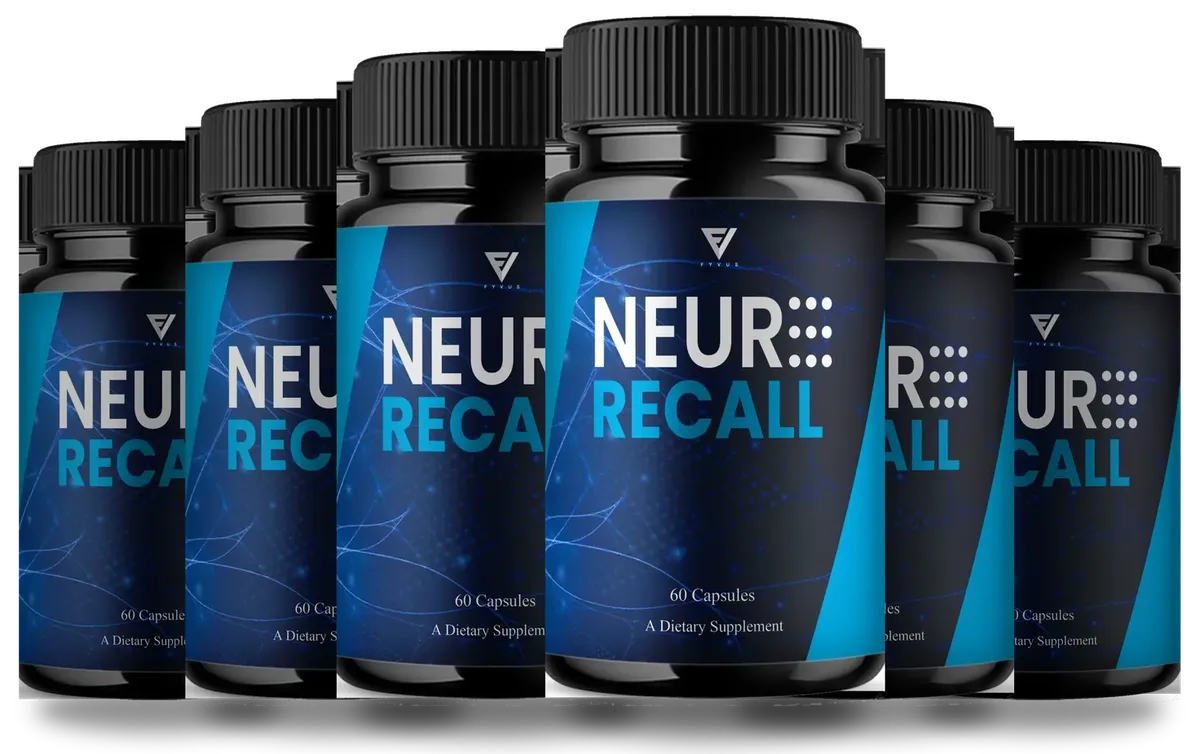
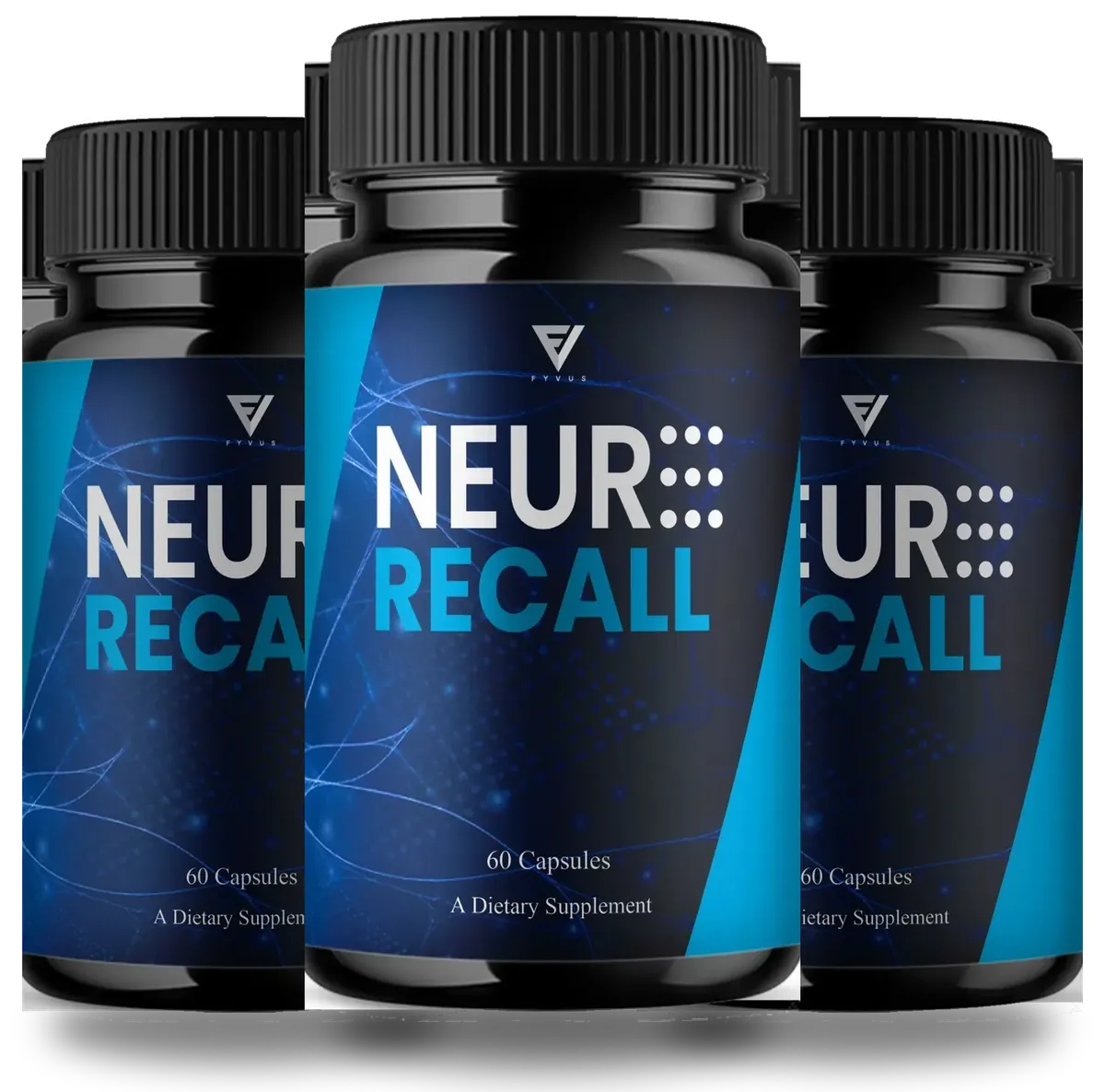
The front label claims very little. It shows the name, “60 Capsules” and “A Dietary Supplement.” The name hints at memory and recall, but the label prints no memory claim.
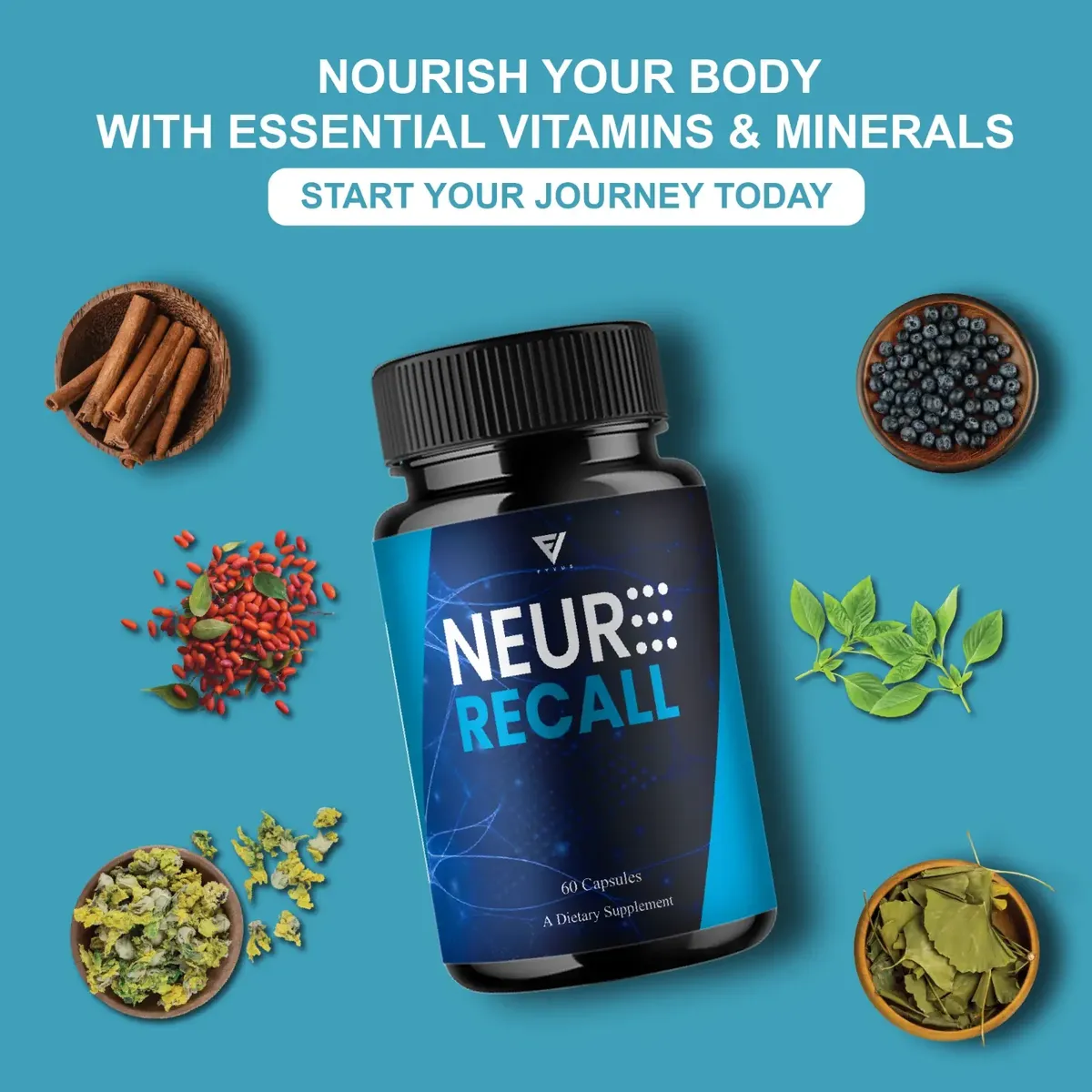
The brand's marketing graphics go further. They show wellness phrases about energy, digestion, mood, immunity and focus. Those phrases are not on the label, and we could not verify any of them.
The FDA does not approve supplements before they are sold (FDA, Q&A on Dietary Supplements). The FTC says health claims in ads need solid scientific proof (FTC, Health Products Compliance Guidance). So this page sticks to what each ingredient is studied for.
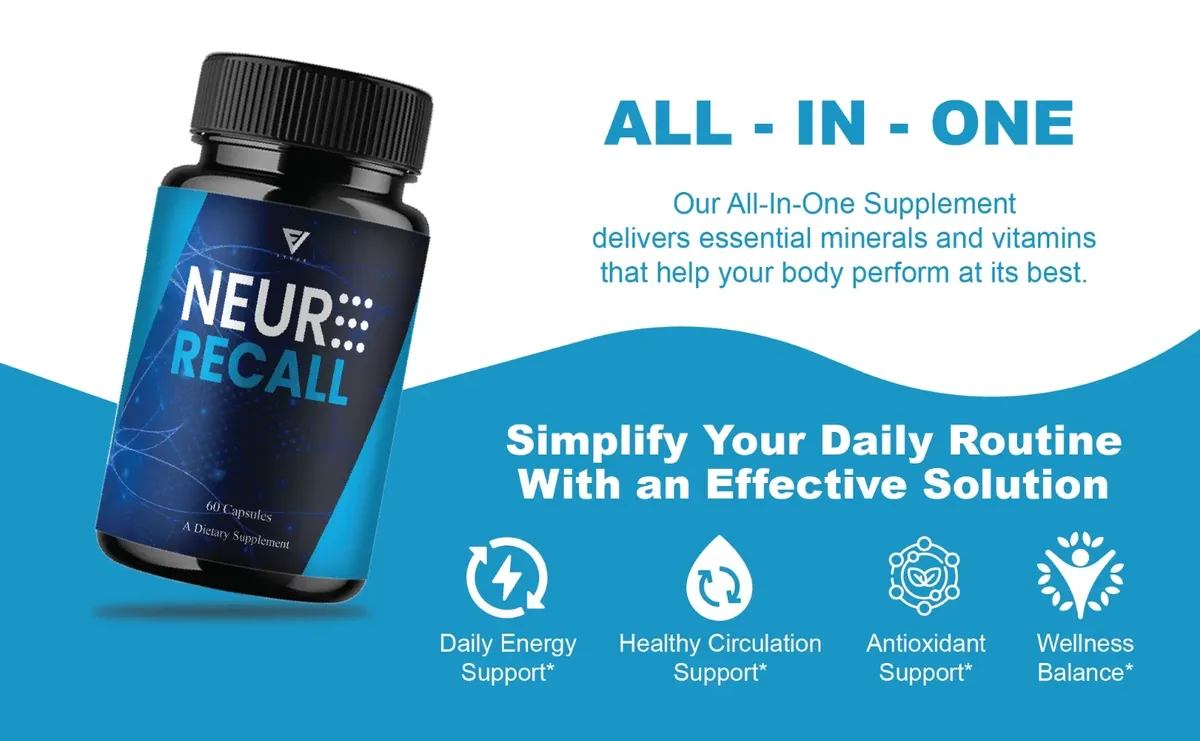
More brand marketing graphics from the pack, shown as received. Phrases such as energy, digestion, immune, mood and detox are the brand's words, not label claims and not checked by us.
What are the ingredients studied for?
Four research areas come up again and again. Only one of them is directly about thinking, and none of the studies used this capsule.
Attention speed
Bacopa trials found small gains at about 300 mg a day.
Blood sugar
Berberine, chromium and ALA are studied for it.
Eye health
Lutein and zeaxanthin were part of a large eye study.
B12 status
A low B12 level can cause memory problems.
Does ginkgo biloba help memory?
The largest trial says no. In the GEM study, 3,069 adults aged 72 to 96 took 120 mg of ginkgo twice a day or a placebo. After a median of about 6 years, rates of cognitive decline were the same in both groups (Snitz et al., JAMA 2009).
NCCIH sums it up the same way: ginkgo did not lower dementia rates (NCCIH, Ginkgo). Ginkgo is second in the Neuro Recall blend. Our ginkgo biloba page covers the research and the bleeding risk in detail.
What is bacopa monnieri studied for?
Bacopa is studied for attention and memory. A meta-analysis pooled nine trials with 518 people. Most used about 300 mg a day of a standardized extract for 12 weeks or longer (Kongkeaw et al., 2014).
The result was a small gain in attention speed. A clear memory benefit was not found, and the authors asked for bigger trials. In Neuro Recall, bacopa is fourth in the blend, so it can weigh about 159 mg at most. See the bacopa monnieri page for more.
Can vitamin B12 and folate help memory?
They can help if you are low. A B12 deficiency can cause confusion and memory problems, and fixing it matters (NIH ODS, Vitamin B12). Adults need 2.4 mcg a day. Each serving here gives 240 mcg, which is 100 times that amount.
For people who already get enough, extra B12 has not been shown to help memory. Folate has a catch too. High folic acid can hide a B12 deficiency, and the adult upper limit is 1,000 mcg a day (NIH ODS, Folate). Count any other supplements and fortified foods you use.
How strong is the evidence for each ingredient?
| Ingredient | Studied for | What was tested | What was found | In Neuro Recall | Source |
|---|---|---|---|---|---|
| Ginkgo biloba | Memory, dementia | 240 mg a day for about 6 years in 3,069 older adults | No drop in dementia or decline | Up to 317.5 mg | (Snitz et al., JAMA 2009) (NCCIH, Ginkgo) |
| Bacopa monnieri | Memory, attention | About 300 mg a day for 12+ weeks, 9 trials | Small gain in attention speed | Up to 158.8 mg | (Kongkeaw et al., 2014) |
| Vitamin B12 | Low B12 and memory | Deficiency studies | Fixing a deficiency matters; extra not shown to help | 240 mcg | (NIH ODS, Vitamin B12) |
| Folate | Healthy folate levels | Adult upper limit 1,000 mcg folic acid | High doses can hide low B12 | 320 mcg folic acid | (NIH ODS, Folate) |
| Berberine | Blood sugar | Mostly studied outside memory | Interacts with several medicines | Up to 105.8 mg | (MSKCC, Berberine) |
| Green tea extract | General wellness | No memory dose set | Rare liver injury with pills | Up to 127 mg | (NCCIH, Green tea) |
| Cinnamon | Many conditions | Mixed research | No condition clearly helped | At least 63.5 mg | (NCCIH, Cinnamon) |
| Lutein & zeaxanthin | Eye health | 10 mg + 2 mg a day in AREDS2 | An eye study, not memory | Up to 63.5 mg | (NEI, AREDS and AREDS2) |
Do memory supplements work?
For most healthy adults, the proof is thin. Large trials of well-known memory herbs have found small effects or none. NCCIH has a plain overview of the research on supplements sold for memory and dementia (NCCIH, Supplements for cognitive function).
The clearest exception is a real deficiency. If your B12 is low, treating it can matter a great deal. That is a job for a blood test and your doctor, not a guess.
Habits with stronger evidence for brain health
- Get enough sleep on most nights
- Move your body most days, even a brisk walk
- Keep blood pressure and blood sugar in your target range
- Get your hearing checked and use hearing aids if you need them
- Stay in touch with friends, family and groups you enjoy
- Ask your doctor whether a B12 blood test makes sense for you
What practical benefits does Neuro Recall offer?
Some benefits have nothing to do with research. They are about how easy the product is to use and to check.
- 01
Two capsules, once a day
One serving is 2 capsules with water. A bottle holds 60, so it lasts 30 days.
- 02
Vitamin amounts you can read
Folate, B12, magnesium and chromium each have an exact amount and a % Daily Value on the label.
- 03
B12 and folate in one place
These two matter for people who run low. A blood test from your doctor tells you if that is you.
- 04
A label that names every item
All ten blend items are listed by name, heaviest first, even though their single amounts are hidden.
- 05
Easy to pair with a checkup
A plain routine is simple to describe to your doctor or pharmacist at your next visit.
The full panel is retyped on our Supplement Facts page, so you can compare it with the bottle you receive.
What weighs for and against it?
Here are the trade-offs side by side. Bring this list to your doctor if you are unsure.
What works in its favor
- Two capsules a day, one bottle per month
- B12 and folate, useful if a blood test shows you are low
- Bacopa, an herb with some attention-speed data
- Every ingredient named on the Supplement Facts panel
- Vitamin and mineral amounts printed in full
What to weigh first
- No published trial of Neuro Recall itself
- Ginkgo did not prevent dementia in the largest trial
- Bacopa is at most about half the studied dose
- Ten items share 635 mg, so single amounts are hidden
- Several ingredients interact with blood thinners or diabetes medicines
Honest note: what the label adds up to
Neuro Recall is a vitamin and mineral base with ten herbs and nutrients sharing 635 mg. That means most blend items are small. Ginkgo failed in the largest trial, and bacopa sits at about half the studied dose at most.
No study of Neuro Recall itself has been published. If you try it, judge it calmly over weeks, and keep your doctor in the loop. The results timeline explains what a fair trial period looks like.
What benefits can Neuro Recall not offer?
Know the limits
Neuro Recall is not a drug. It is not shown to treat, cure or prevent memory loss, dementia or Alzheimer's disease. Memory loss that disrupts daily life is a reason to see a doctor (Alzheimer's Association, 10 warning signs).
Sudden confusion, trouble speaking, numbness or weakness can mean a stroke. Call 911 right away (CDC, Stroke signs).
Before you order, check who it is for and read the side effects and interactions. Ginkgo, berberine and chromium are the ones most likely to matter if you take medicine.
Neuro Recall benefits: questions people ask
What are the benefits of Neuro Recall?
No benefit of Neuro Recall itself has been tested in a published study. Its ingredients are studied for things like attention speed, blood sugar, eye health and fixing a low B12 level.
Does Neuro Recall work for memory?
Nobody knows, because the product has not been tested. The most famous memory herb in it, ginkgo, did not lower dementia rates in a 6-year trial of more than 3,000 older adults.
Do memory supplements work?
For most people, the evidence is weak. Large trials of popular memory herbs have mostly found small or no effects. Talk to your doctor before trying one.
Is ginkgo the main ingredient in Neuro Recall?
Ginkgo is second in the blend, after cinnamon. It could weigh up to 317.5 mg per serving, but the exact amount is not printed.
What is bacopa monnieri good for?
In a review of nine trials, about 300 mg a day for 12 weeks or more gave small gains in attention speed. A clear memory benefit was not shown.
Can vitamin B12 help memory?
It can if your B12 is low, since a deficiency can cause confusion and memory problems. Extra B12 has not been shown to help people who already get enough.
Does Neuro Recall give you energy or help digestion?
Those phrases appear on brand marketing graphics, not on the label. We could not verify them, and no study of the product backs them.
Why is berberine in a memory supplement?
The brand does not say. Berberine is studied mainly for blood sugar, and it interacts with several medicines, so ask your doctor first.
Is Neuro Recall worth trying?
That depends on what you expect. As a simple daily vitamin and herb routine it may suit some adults; as a fix for memory loss it is not the right tool.
Can Neuro Recall replace a memory checkup?
No. Memory loss that disrupts daily life needs a doctor, who can look for treatable causes such as low B12, thyroid problems or medicine side effects.
Ready to try Neuro Recall?
2 capsules a day, 60 per bottle, with the full label shown on this site. Prices and refund terms appear on the checkout. On medicine or worried about memory? Talk to your doctor first.