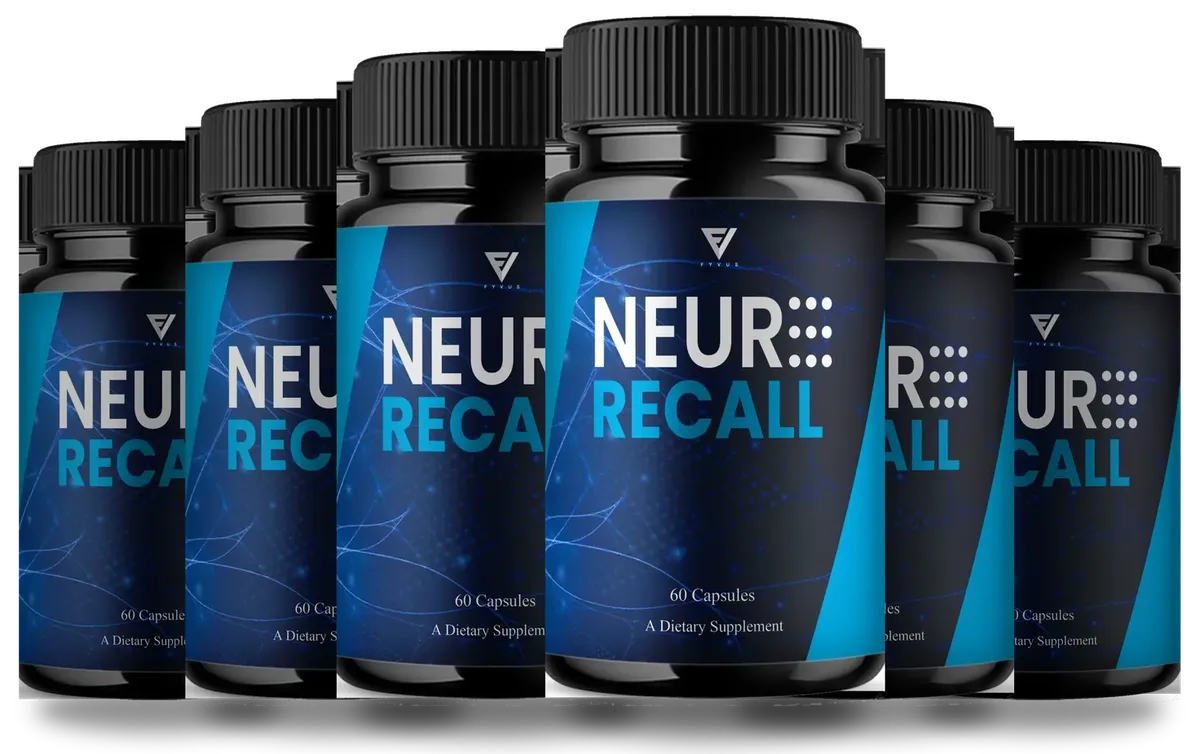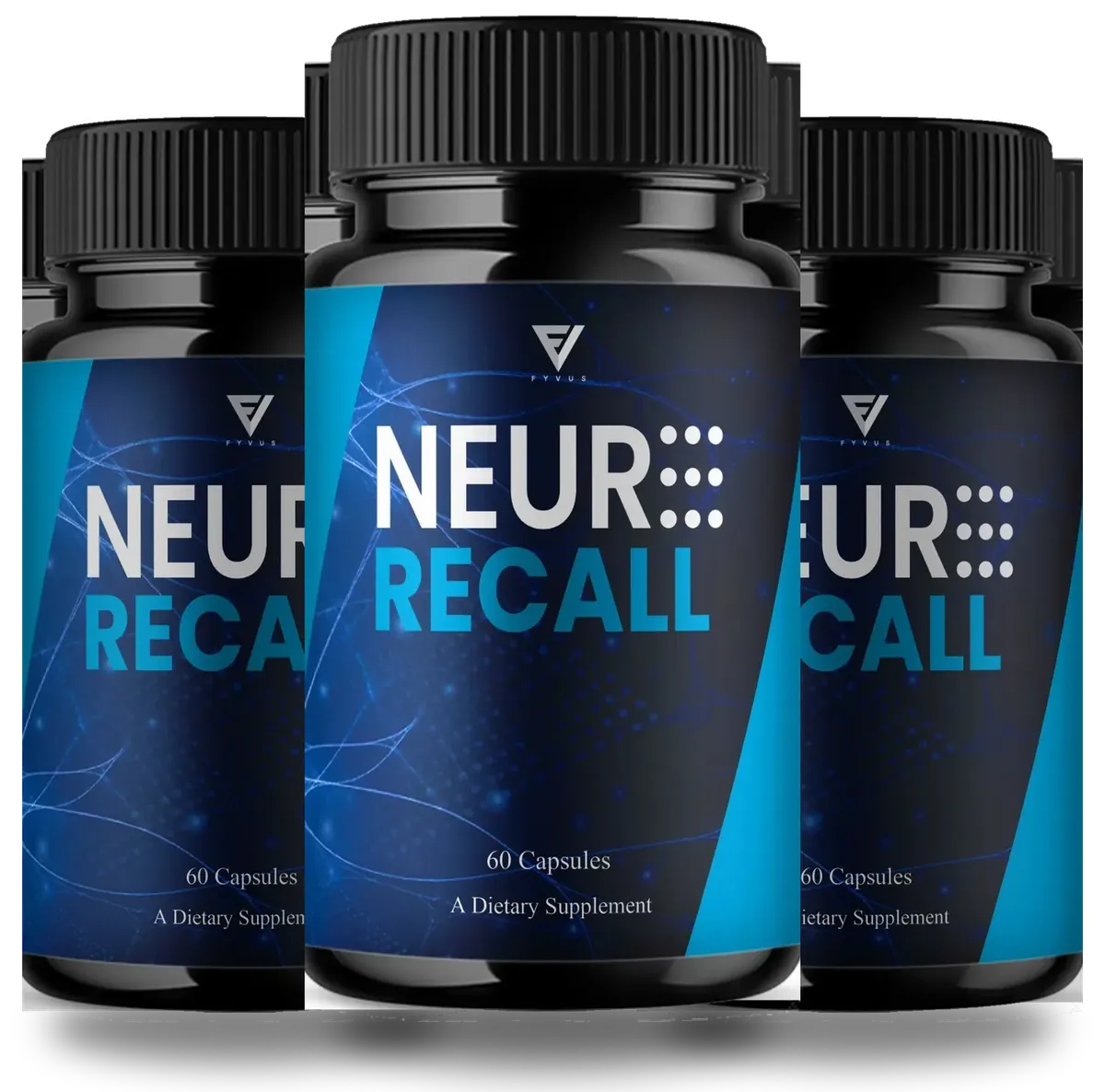
Choosing a Memory Supplement: A Neuro Recall Buyer's Checklist
Quick answerMost memory supplements have weak evidence. In the largest trial, ginkgo did not lower dementia rates, and bacopa showed only small gains in attention speed. The FDA does not approve any supplement to treat memory loss. Before you buy one, read the full label, compare doses with research, check drug interactions, read the refund terms and ignore celebrity ads.
- Refund terms shown at checkout
- Shipping cost shown before you pay
Do memory supplements work?
The research behind memory supplements is much thinner than the ads. NCCIH keeps an overview of supplements marketed for memory, dementia and Alzheimer's disease (NCCIH, Supplements for cognitive function).
Two of the most studied herbs show the pattern. In a trial of 3,069 older adults, ginkgo taken for about six years did not slow cognitive decline (Snitz et al., JAMA 2009). A review of nine bacopa trials found small gains in attention speed and no clear memory benefit (Kongkeaw et al., 2014).
- 635 mgblend shared by ten items in Neuro Recall
- 3,069older adults in the main ginkgo trial
- 9bacopa trials in one review
- 2.4 mcgB12 adults need a day
One fact frames everything else. The FDA does not approve dietary supplements before they are sold (FDA, Q&A on Dietary Supplements). The maker decides what goes in the bottle and what the ad says. That puts the checking on you.
What are the best memory supplements, honestly?
People search for the best memory supplements every day. An honest answer is that no supplement has been shown to prevent dementia or bring back lost memory. What you can do is compare products on the facts. The table shows where common memory ingredients stand.
| Ingredient | What research found | Source |
|---|---|---|
| Ginkgo biloba | No drop in dementia or cognitive decline over about 6 years at 240 mg a day | (Snitz et al., JAMA 2009) (NCCIH, Ginkgo) |
| Bacopa monnieri | Small gains in attention speed at about 300 mg a day for 12+ weeks; no clear memory benefit | (Kongkeaw et al., 2014) |
| Vitamin B12 | Helps if you are deficient; extra not shown to help people who get enough | (NIH ODS, Vitamin B12) |
| Alpha-GPC | Benefit for healthy adults unclear; some research links long-term use to stroke risk | (WebMD, Alpha-GPC) |
| L-theanine | Limited human data; may add to sedatives | (MSKCC, L-theanine) |
The memory supplement buyer's checklist
Use this list with any memory product, in the store or online. A product does not need to be perfect. It does need to be open about what is inside and what you are agreeing to.
The 10-point memory supplement checklist
- The label shows every ingredient with its amount, not only a blend total
- The main ingredients match the doses used in studies
- You have checked interactions with your medicines
- The warnings fit you: pregnancy, surgery, liver or blood sugar issues
- The maker or distributor is named on the label
- Seals are explained, not just pictured
- The price and refund terms are clear before you pay
- The checkout names the same product you saw in the ad
- No celebrity, cure or dementia claim is used to sell it
- Your doctor knows you plan to take it
How do you read a memory supplement label?
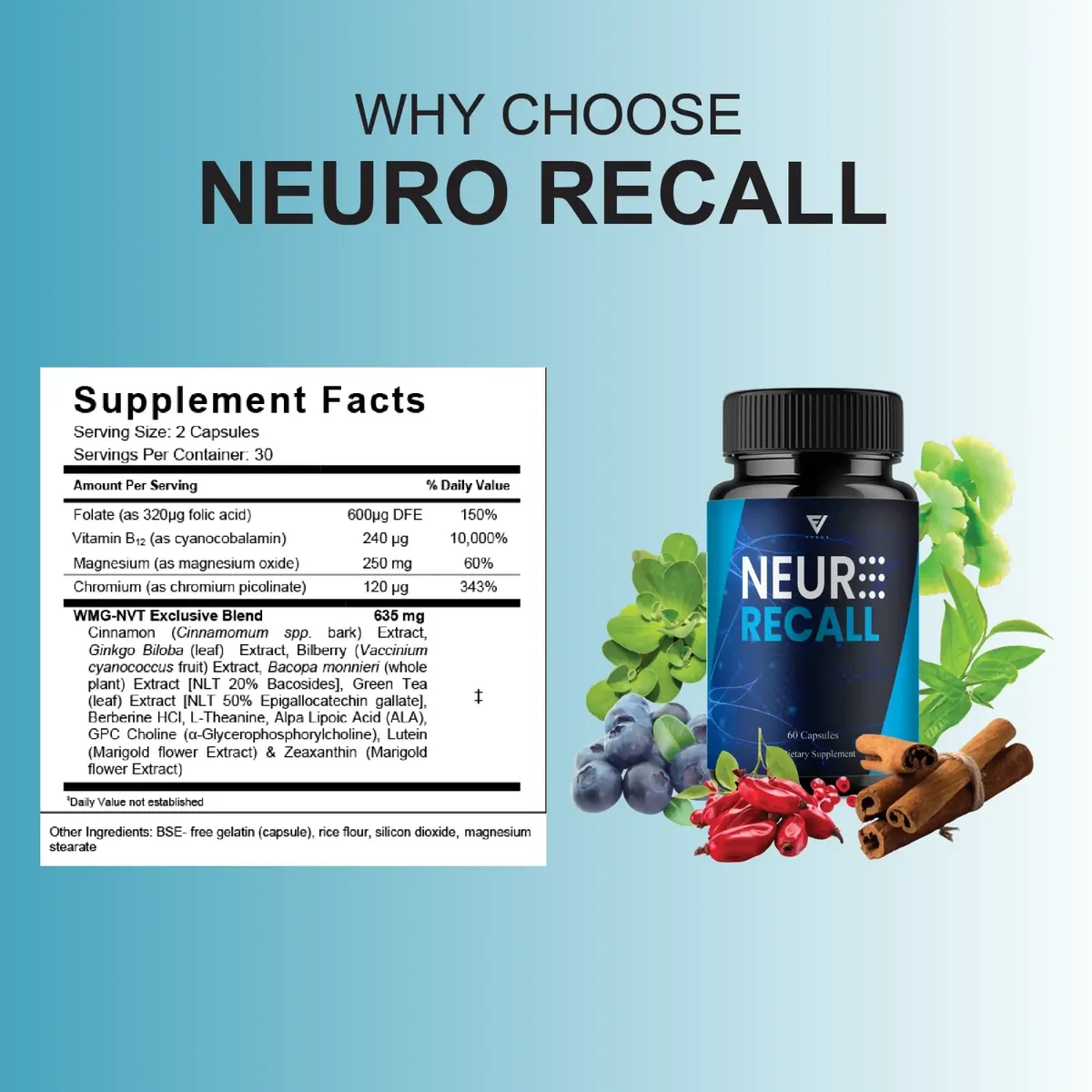
Start with the Supplement Facts panel, not the front of the box. Look for the serving size, how many servings are in the bottle, and the amount of each ingredient. Then read the other ingredients line, since capsules may be gelatin or plant-based.
What a proprietary blend hides
A blend lists several ingredients under one total weight. U.S. rules say they must be listed heaviest first, but only the total is required (21 CFR 101.36). You can work out the most each item could weigh, but not the real amount. Our Supplement Facts page shows how this works on the Neuro Recall label.
- Cinnamon Bark Extract At least 63.5 mg
- Ginkgo Biloba Leaf Extract Up to 317.5 mg
- Bilberry Fruit Extract Up to 211.7 mg
- Bacopa Monnieri Extract Up to 158.8 mg
- Green Tea Leaf Extract Up to 127 mg
- Berberine HCl Up to 105.8 mg
- L-Theanine Up to 90.7 mg
- Alpha Lipoic Acid Up to 79.4 mg
- GPC Choline (Alpha-GPC) Up to 70.6 mg
- Lutein & Zeaxanthin Up to 63.5 mg
Do the doses match the research?
A dose that worked in a trial is the only fair benchmark. If a capsule holds a tenth of that amount, you cannot borrow the trial's results.
Bacopa is a clear example. The trials used about 300 mg a day. The chart below compares that with the most the Neuro Recall label can hold, and adds notes on ginkgo, B12 and the blend.
Bacopa monnieriAbout half at most
Ginkgo bilobaDose not the problem
The big ginkgo trial used 240 mg a day for about 6 years and still found no drop in dementia. (Snitz et al., JAMA 2009)
Vitamin B12100x the RDA
240 mcg is 100 times the 2.4 mcg adults need. It helps if you are low; extra is not shown to boost memory. (NIH ODS, Vitamin B12)
Whole blend635 mg for 10 items
Ten herbs and nutrients share 635 mg, so most can only be present in small amounts. (21 CFR 101.36)
Which medicines can memory supplements interact with?
Natural does not mean harmless. Several memory ingredients act on blood clotting, blood sugar or the liver. Show the label and your medicine list to your doctor or pharmacist first.
Blood thinners or aspirin
Ginkgo may raise bleeding risk. Stop before surgery if your doctor advises it.
Diabetes medicine
Chromium, berberine, alpha lipoic acid and cinnamon may lower blood sugar further.
Transplant and other drugs
Berberine interacts with cyclosporine, tacrolimus and drugs cleared by liver enzymes.
Sedatives
L-theanine may add to drowsiness from sleep or anxiety medicine.
Liver disease
Green tea extract pills and cassia cinnamon have liver concerns.
Thyroid medicine
Chromium may reduce how well levothyroxine is absorbed.
These points come from NIH, NCCIH and Memorial Sloan Kettering sources such as (NCCIH, Ginkgo) and (MSKCC, Berberine). The side effects page applies them to the Neuro Recall label.
What do seals and badges really mean?
Badges look reassuring, but a picture is not a certificate. Ask what each one means and who checked it. Here is how this site explains the three badges on Neuro Recall brand graphics.
A brand badge. It refers to the FDA's supplement manufacturing rules. No facility or certificate number is published.
A brand badge. A facility listing is not FDA approval of the product, and the facility is not named.

A brand badge. The refund window is printed on the live checkout, not in our files.
What should you check about price and refunds?
Read the price, shipping and refund terms before you type a card number. Keep the order email and note the date.
For Neuro Recall, prices are not published in our files. The checkout shows the price, shipping and refund terms before you pay. See pricing for the pack sizes.
Refund terms: read them at checkout
The refund window is not published in our files. It is printed on the live checkout. Read it before you pay, keep the order email, and call +1 (302) 200-3480 with your order ID to ask for a refund.
Why should you ignore celebrity memory pill ads?
Celebrity videos are used to sell memory pills, and some are fake. The Better Business Bureau warns that scammers now use AI to make videos of famous people praising products (BBB, AI celebrity scams). The FTC says health claims in ads must be backed by solid science (FTC, Health Products Compliance Guidance).
If an ad shows a celebrity, a miracle story or a countdown timer, close it. Search for the product's label on your own. Our guide to fake celebrity supplement ads and the Neuro Recall scam check show what to look for.
How does Neuro Recall score on this checklist?
We sell Neuro Recall, so we apply the same list to it in public. Here is how it scores against each point, based on the label in the brand images.
| Checklist point | How Neuro Recall does | Result |
|---|---|---|
| Full label with amounts | Four nutrients have exact amounts; ten herbs share one 635 mg blend | Partial |
| Doses match research | Bacopa is at most about half the studied dose; ginkgo failed in the big trial anyway | Weak |
| Interactions listed | Label says ask your provider; drug interactions are not printed | Partial |
| Warnings | Not for pregnancy or nursing; keep away from children | Yes |
| Maker named | Not named in our files; the bottle shows a FYVUS logo | No |
| Seals explained | Shown as brand badges, not verified certificates | Partial |
| Price and refund terms | Shown only on the checkout | Partial |
| No celebrity claims | This site uses none; fake ads using the name were reported | Check the ad |
Honest note: Neuro Recall is a vitamin and mineral base plus ten herbs and nutrients in a 635 mg blend, so most are present in small amounts. No trial of the product has been published. On the plus side, it is a simple 2-capsule routine with a printed label, and its B12 and folate matter if you run low. Our desk scores are below.
Neuro Recall buyer's checklist FAQ: questions people ask
Do memory supplements work?
For most people, the evidence is weak. Large trials of ginkgo found no drop in dementia, and bacopa trials showed small gains in attention speed rather than clear memory gains. Treating a real B12 deficiency is the clear exception.
What is the best memory supplement?
No supplement has been shown to prevent dementia or reverse memory loss, so there is no clear winner. The better question is whether a product has a full label, research-level doses and a safety profile that suits you.
Are brain health supplements FDA approved?
No. The FDA does not approve dietary supplements before they are sold. A seal that says FDA registered facility refers to a building listing, not a product approval.
What should I look for on a memory supplement label?
Look for the amount of each ingredient, the serving size, the other ingredients and the warnings. A proprietary blend shows only a total weight, so you cannot compare each herb with the dose used in studies.
Can memory supplements interact with medications?
Yes. Ginkgo may raise bleeding risk with blood thinners, and several herbs can lower blood sugar along with diabetes medicine. Show the label to your doctor or pharmacist first.
Do supplements for brain fog work?
There is little good research on supplements for brain fog. Poor sleep, low B12, thyroid problems, medicines and stress are common causes worth checking with a doctor first.
What is a proprietary blend?
It is a group of ingredients listed under one total weight, heaviest first. The label does not have to print how much of each one is inside.
Is a memory supplement endorsed by a celebrity legit?
Be careful. The Better Business Bureau warns that scammers use AI-made celebrity videos, so a famous face in an ad is not proof of an endorsement.
Does Neuro Recall pass this checklist?
In part. Neuro Recall prints a full Supplement Facts panel and clear warnings, but its herbs share a 635 mg blend, its bacopa is at most about half the studied dose, and its price and refund terms appear only on the checkout.
Checked the list and still curious about Neuro Recall?
Compare the label with your medicine list, talk to your doctor, and read the price and refund terms on the checkout before you decide.